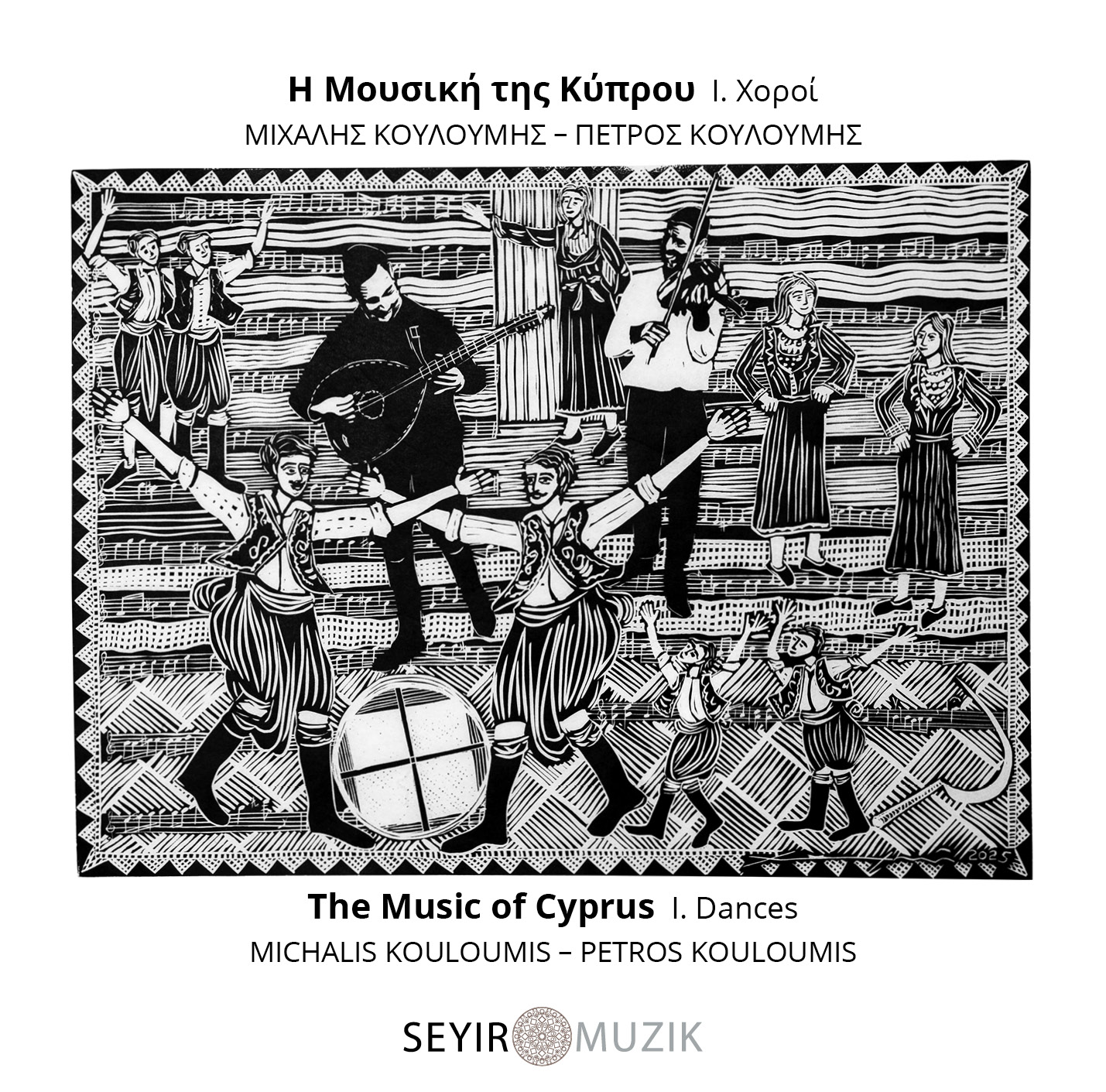
MICHALIS KOULOUMIS, PETROS KOULOUMIS
The Music of Cyprus I. Dances
Digital release date: 31.07.2026
Physical release date: 30.10.2026
Catalogue number: 2GN033
FORMAT: DOUBLE CD / DIGITAL
FEATURED ARTISTS: Michalis Kouloumis: violin, Petros Kouloumis: laouto.
TRACKLIST
CD 1
01 1ος αντρικός αντικρυστός (1st male karsilamas) (2:07)
02 2ος & 3ος αντρικοί αντικρυστοί (2nd & 3rd male karsilamas) (3:08)
03 4ος αντρικός αντικρυστός (4th male karsilamas) (2:59)
04 Συρτός Πολίτικος (Syrtos Politikos) (3:28)
05 Συρτός Σηλυβριανός (Syrtos Silivrianos) (1:53)
06 Συρτός Αζιζιές (Syrtos Azizies) (3:11)
07 Συρτός Σκαλιώτικος (Syrtos Skaliotikos) (2:47)
08 Συρτός Μαυρομμάτης (Syrtos Mavrommatis) (2:06)
09 Συρτός Παραλυμένος (Syrtos Paralymenos) (2:21)
10 Συρτός Κλαμούρης (Syrtos Klamouris) (1:20)
11 Τραγούδι του γάμου (Wedding song) (2:21)
12 Το πανέριν (Χορός των Προικιών) (Panerin – Dowry dance) (2:16)
13 Αραπιές της καντήλας (Arapies tis kantilas) (3:30)
14 Σμύρνη Μαρς (Smyrna March) (2:54)
15 Μαρς του Κέκκου (Kekkos’ March) (2:49)
16 Κοζάν μαρς (Kozan March) (3:20)
17 Μαρς Αβέρωφ (Averof March) (4:20)
18 Κυπριακή Σούστα (Cypriot Sousta) (2:45)
Total time: 49:43
CD 2
01 1ος γυναικείος αντικρυστός (1st female karsilamas) (2:24)
02 2ος & 3ος γυναικείοι αντικρυστοί (2nd & 3rd female karsilamas) (2:58)
03 4ος γυναικείος αντικρυστός (4th female karsilamas) (2:16)
04 Συρτός Φλογέρα (Syrtos Floyera) (2:32)
05 Συρτός Άρμα χορός ‘Βασιλιτζιά’ (Syrtos Arma Choros – Vassilidja) (3:12)
06 Της τραουθκιάς ‘Ίσια Φωνή Κοκκινοχωρίων’ (Tis traouthkias – Isia Foni from Kokkinochoria) (1:43)
07 Αραπιές της καντήλας Διπλόχορδο (Arapies on double-string) (2:48)
08 Τσιφτετέλι Διπλόχορδο (Tsifteteli on double-string) (2:42)
09 Ζεϊμπέκικο Απτάλικο (Zeimpekiko Aptaliko) (2:25)
10 Ζεϊμπέκικο Βρακάδικος (Zeimpekiko Vrakadikos) (1:58)
11 Ζεϊμπέκικο Αϊβαλιώτικο (Zeimpekiko Aivaliotiko) (2:03)
12 Ζεϊμπέκικο Στάμνα (Zeimpekiko Stamna) (2:27)
13 Ζεϊμπέκικο Κοφτόν (Zeimpekiko Kofton) (1:53)
14 Ζεϊμπέκικος Καλοχωρήτικο (Zeimpekiko Kalohoritiko) (2:25)
15 Ζεϊμπέκικο Βαρύ Σμυρνέικο (Zeimpekiko Vary) (1:56)
16 Ζεϊμπέκικο Χιτζαζκιάρ (Zeimpekiko Hidjazkiar) (1:58)
17 Ζεϊμπέκικο Σάρχος (Zeimpekiko Sarhos) (2:47)
18 Ζεϊμπέκικο Κασαμπαλιώτικo (Zeimpekiko Kasampaliotiko) (1:53)
19 Δρεπάνιν (Sickle Dance) (2:55)
20 Μάντρα (Mantra Dance) (3:02)
Total time: 48:22
CREDITS
Recorded live 27-30 December 2023
Eleven63 Studios, Nicosia
Engineer: Andreas Trachonitis
Mixed and Mastered by Andreas Trachonitis
Photography: Simon Mercouris, Kleanthi Anastasiadou, Andreas Trachonitis, Andreas Chiras, Petros Petridis, Loukas Stylianou, Tahir Palali
Front cover artwork: Hambis Tsagkaris
Design: Eleni Lomvardou
Produced by Seyir Muzik
Description
Born into a musical family in Cyprus, brothers Michalis and Petros Kouloumis inherited a rich legacy from their father, Elias Kouloumis. Growing up in the Kokkinochoria region, they were immersed from an early age in traditional and popular music, folk poetry and singing. Furthermore, they received a broad musical education that combined the disciplines of Western and Eastern classical traditions, creating a unique identity that mingles their roots with the diverse cultures of the Eastern Mediterranean.
Michalis Kouloumis established himself as one of the most distinguished violinists of his generation, collaborating with renowned artists such as Ross Daly, Kudsi Erguner, Efren Lopez, Jordi Savall, Sokratis Sinopoulos, performing across a wide range of musical genres, including Ottoman and Arabic classical repertoire, as well as Greek, Arabic and Turkish traditional and popular music. His brother Petros followed a unique artistic path as a singer. His expressive voice, exceptional vocal range and stylistic versatility, defined him as one of the most characteristic soloists in Greece and Cyprus. Petros Kouloumis has collaborated with artists such as Giorgos Dalaras, Glykeria, Themis Adamantidis, Dimitris Basis and Christos Sikkis.
Through their performances, recordings and teachings, Michalis and Petros have contributed to bringing the musical heritage of Cyprus into dialogue with the wider repertoire of Greek music. The deep connection between the two brothers, shaped by family, shared experiences, and decades of artistic exploration, remains at the heart of their common identity. With their debut collaborative album Dances of Cyprus, traditional songs and instrumental melodies are being presented as a living, truthful and deeply personal musical language.
Γεννημένοι σε μια μουσική οικογένεια στην Κύπρο, τα αδέλφια Μιχάλης και Πέτρος Κουλουμής κληρονόμησαν μια πλούσια μουσική κληρονομιά από τον πατέρα τους, Ηλία Κουλουμή. Μεγαλώνοντας στα Κοκκινοχώρια, ήρθαν από πολύ νωρίς σε επαφή με την παραδοσιακή μουσική, τη λαϊκή ποίηση και το τραγούδι. Παράλληλα, έλαβαν μια ευρεία μουσική παιδεία που συνδύαζε τη δυτική και την ανατολική λόγια μουσική, διαμορφώνοντας μια ξεχωριστή καλλιτεχνική ταυτότητα που συνενώνει τις κυπριακές τους ρίζες με τις ποικίλες μουσικές κουλτούρες της Ανατολικής Μεσογείου.
Ο Μιχάλης Κουλουμής καθιερώθηκε ως ένας από τους σημαντικότερους βιολιστές της γενιάς του, συνεργαζόμενος με διεθνώς αναγνωρισμένους καλλιτέχνες όπως οι Ross Daly, Kudsi Erguner, Efren López, Jordi Savall και Σωκράτης Σινόπουλος, μεταξύ άλλων. Η καλλιτεχνική του πορεία εκτείνεται σε ένα ευρύ φάσμα μουσικών ιδιωμάτων, από την οθωμανική και την αραβική λόγια μουσική έως την ελληνική, αραβική και τουρκική παραδοσιακή και λαϊκή μουσική. Ο αδελφός του, Πέτρος, ακολούθησε τη δική του ξεχωριστή καλλιτεχνική διαδρομή ως τραγουδιστής. Η εκφραστική του φωνή, η εξαιρετική φωνητική του έκταση και η στιλιστική του ευελιξία τον ανέδειξαν ως έναν από τους πλέον σημαντικούς ερμηνευτές σε Ελλάδα και Κύπρο. Έχει συνεργαστεί με κορυφαίους καλλιτέχνες, όπως οι: Γιώργος Νταλάρας, Γλυκερία, Θέμης Αδαμαντίδης, Δημήτρης Μπάσης και Χρίστος Σίκκης.
Μέσα από τις συναυλίες, τις δισκογραφικές τους δουλειές και τη διδασκαλία, ο Μιχάλης και ο Πέτρος έχουν συμβάλει ουσιαστικά στην ανάδειξη της μουσικής κληρονομιάς της Κύπρου και στη δημιουργική της συνομιλία με την ελληνική και την ευρύτερη μουσική της καθ’ ημάς Ανατολής. Ο βαθύς δεσμός ανάμεσα στα δύο αδέλφια, σφυρηλατημένος μέσα από την οικογένεια, τις κοινές εμπειρίες και δεκαετίες καλλιτεχνικής αναζήτησης, παραμένει ο πυρήνας της κοινής τους καλλιτεχνικής ταυτότητας. Με το έργο τους «Χοροί της Κύπρου», που αποτελεί και το πρώτο κοινό τους ηχογράφημα, τα παραδοσιακά τραγούδια και οι οργανικές μελωδίες παραδίδονται στο κοινό ως μια ζωντανή και βαθιά βιωματική μουσική γλώσσα.