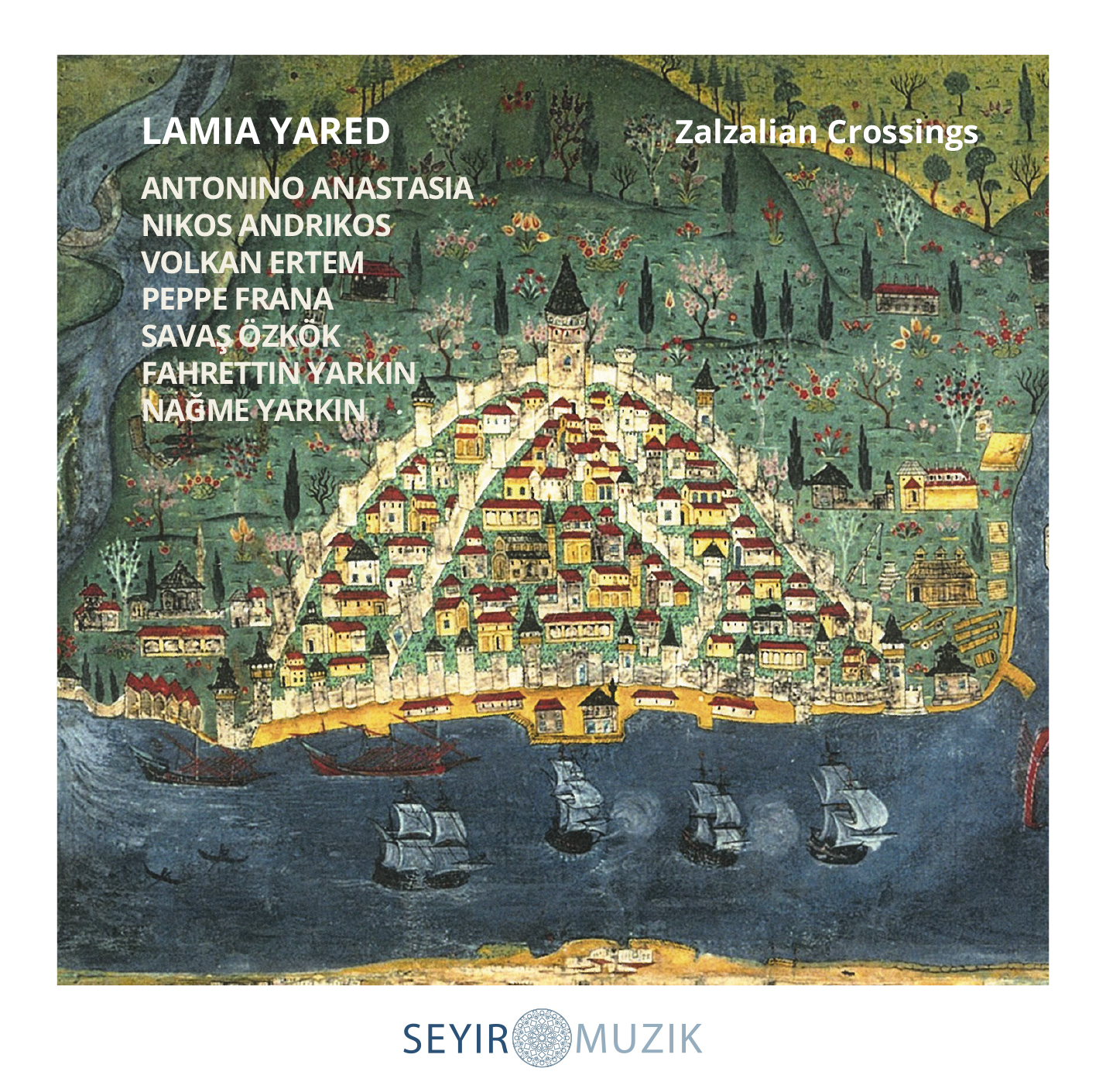
LAMIA YARED
Zalzalian Crossings
Upcoming release date: 25.09.2026
Catalogue number: 2GN043
Format: CD (limited edition) / DIGITAL
FEATURED ARTISTS: Lamia Yared: vocals, artistic production, Antonino Anastasia: bendir, tamburello, Nikos Andrikos: lavta, vocals, Volkan Ertem: cello, Peppe Frana: oud, lute, Savaş Özkök: kanun, Fahrettin Yarkın: daire, bendir, Nağme Yarkın: kemençe of Istanbul.
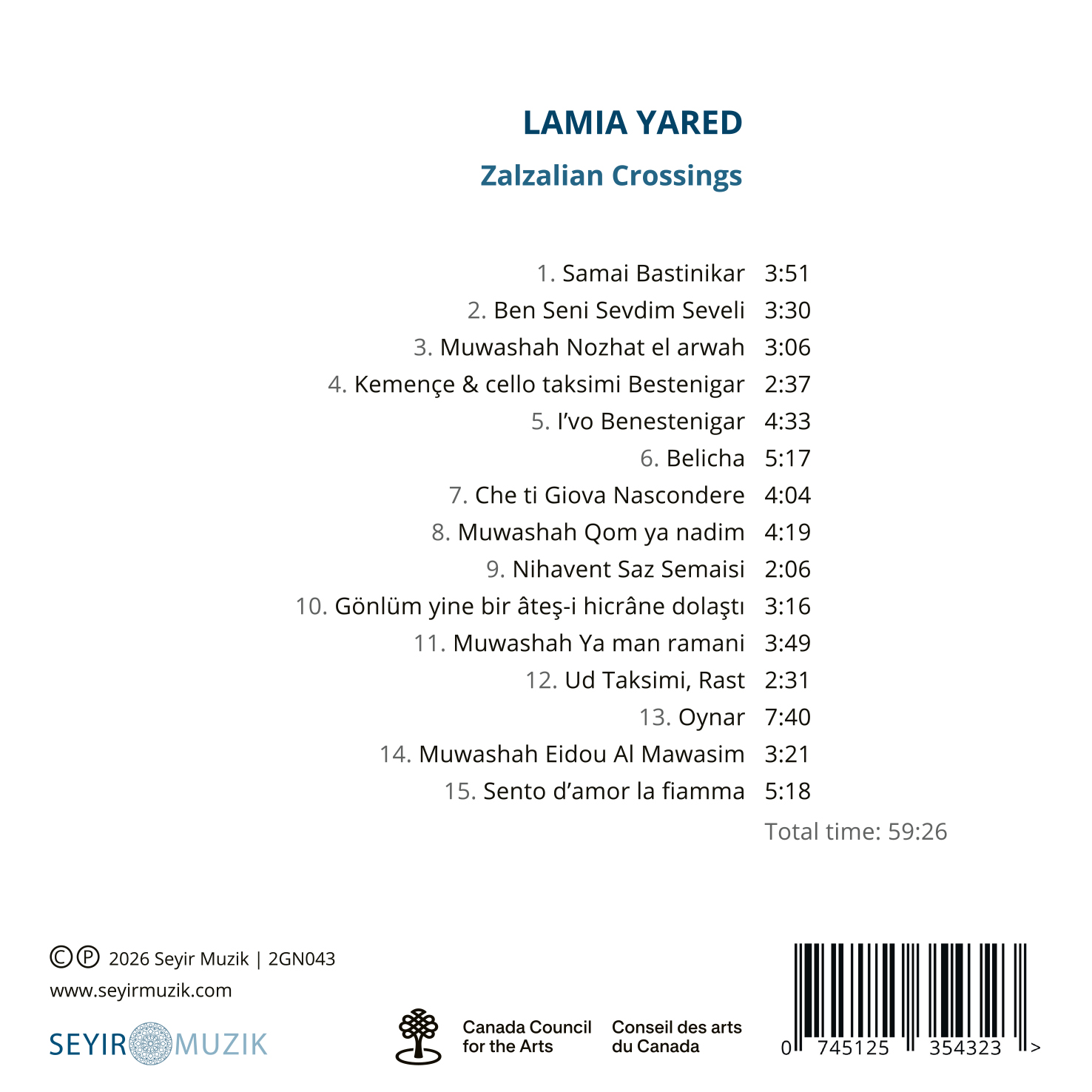
TRACKLIST
01 Samai Bastinikar (3:51)
02 Ben Seni Sevdim Seveli (3:30)
03 Muwashah Nozhat el arwah (3:06)
04 Kemençe & cello taksimi Bestenigar (2:37)
05 I’vo Benestenigar (4:33)
06 Belicha (5:17)
07 Che ti Giova Nascondere (4:04)
08 Muwashah Qom ya nadim (4:19)
09 Nihavent Saz Semaisi (2:06)
10 Gönlüm yine bir âteş-i hicrâne dolaştı (3:16)
11 Muwashah Ya man ramani (3:49)
12 Ud Taksimi, Rast (2:31)
13 Oynar (7:40)
14 Muwashah Eidou Al Mawasim (3:21)
15 Sento d’amor la fiamma (5:18)
Total time: 59:26
CREDITS
Recorded December 2025
Ada Stüdyo, Istanbul, Turkiye
Engineers: Özgür Özkan Mete, İhsan Apça
Mixing and mastering: Ben Ewing
Photography: Ayten Çelik, Imge Yuksel
Produced by Seyir Muzik
Description
Rooted in Ottoman Turkish and Arabic classical repertoires, and in dialogue with the Italian Trecento tradition, this recording brings together Lamia Yared (vocals, composition) alongside an ensemble of distinguished collaborators: Antonino Anastasia (tamburello, riqq, bendir), Fahrettin Yarkın (daîre, bendir), Nağme Yarkın (Istanbul kemençe), Nikos Andrikos (lavta, guest vocals), Peppe Frana (lute, oud, arrangements), Savaş Özkök (kanun), and Volkan Ertem (cello).
At the crossroads of Istanbul, Florence, and the Mashreq, the album unfolds as a musical journey shaped through both collective and individual arrangements. I’ vo Benestenigâr is based on I’ vo bene, an original piece by Gherardello da Firenze (c. 1320, Florence), reimagined by Lamia Yared from its medieval source material, while Belicha, arranged by Peppe Frana, expands the ensemble’s Ottoman instrumental dimension. Zalzalian Crossings brings together muwashshaḥāt, şarkılar, and Trecento repertoire within a modal suite inspired by the wasla form.
The program emphasizes rarely performed works from the muwashshaḥ tradition by composers such as Omar al-Batch and Ali Darwish, placed in dialogue with earlier sources including Dede Efendi, and reinterpreted through Byzantine manuscript traditions alongside medieval Florentine repertoire.